Tutorial 4
Pragmatic Integration of Large Language Models into Biomedical Design and Wireless Power Transfer
Large language models (LLMs) are being adopted across drug discovery faster than the evidence supporting their use. This tutorial gives attendees a structured, evidence-informed view of where LLMs genuinely contribute today, the engineering strategies that make their outputs reliable and traceable, including attribution-based interpretability, retrieval-augmented generation, and domain-specific fine-tuning, and a practical governance checklist covering privacy, bias, and regulatory compliance. The goal is to position LLMs as auxiliary decision-support instruments under continuous human supervision, not as replacements for domain expertise and laboratory validation.
Unlike AI-in-pharma tutorials that either showcase generative hype or narrow methodology, this tutorial is organised around pragmatic engineering. It uses published empirical evidence, including experimentally validated cases such as generative DDR1 inhibitor design and retrieval-assisted baricitinib repurposing for COVID-19, as benchmarks for both the value and the limits of LLMs, and distils the engineering patterns behind those outcomes.
The technical innovations presented include: attention- and attribution-based interpretability toolkits (Integrated Gradients, layer-wise relevance propagation, SHAP, counterfactual analysis) aligned with medicinal-chemistry semantics such as binding motifs and toxicophores; retrieval-augmented generation with dense passage retrieval and multistage screening for knowledge freshness and citation traceability; domain-specific fine-tuning and beyond-SMILES tokenisation for target-conditioned molecular generation under multi-parameter optimisation; and a design-make-test-learn blueprint that closes the loop between model proposals, automated laboratories, and expert judgement.
Large language models (LLMs) are being adopted across drug discovery faster than the evidence supporting their use. This tutorial gives attendees a structured, evidence-informed view of where LLMs genuinely contribute today, the engineering strategies that make their outputs reliable and traceable, including attribution-based interpretability, retrieval-augmented generation, and domain-specific fine-tuning, and a practical governance checklist covering privacy, bias, and regulatory compliance. The goal is to position LLMs as auxiliary decision-support instruments under continuous human supervision, not as replacements for domain expertise and laboratory validation.
Unlike AI-in-pharma tutorials that either showcase generative hype or narrow methodology, this tutorial is organised around pragmatic engineering. It uses published empirical evidence, including experimentally validated cases such as generative DDR1 inhibitor design and retrieval-assisted baricitinib repurposing for COVID-19, as benchmarks for both the value and the limits of LLMs, and distils the engineering patterns behind those outcomes.
The technical innovations presented include: attention- and attribution-based interpretability toolkits (Integrated Gradients, layer-wise relevance propagation, SHAP, counterfactual analysis) aligned with medicinal-chemistry semantics such as binding motifs and toxicophores; retrieval-augmented generation with dense passage retrieval and multistage screening for knowledge freshness and citation traceability; domain-specific fine-tuning and beyond-SMILES tokenisation for target-conditioned molecular generation under multi-parameter optimisation; and a design-make-test-learn blueprint that closes the loop between model proposals, automated laboratories, and expert judgement.
The tutorial is organised into five progressive parts, each combining conceptual framing with published case studies and practical guidelines.
Part 1 - Foundations: the evolution of drug design methodologies from empirical screening to docking, QSAR, genomics, and machine learning; transformer and LLM architectures for molecular and biological sequences; and the position of LLMs among cheminformatics tools and protein language models.
Part 2 - Applications across the pipeline: disease mechanism understanding (biomedical entity and relation extraction, literature and multi-omics integration, biomarker and target discovery); drug candidate identification (virtual screening, drug-target interaction prediction, knowledge-graph-driven repurposing); molecular design (deep generative models, multi-objective optimisation balancing potency, ADMET, and synthetic feasibility, benchmark suites such as GuacaMol); and clinical trial optimisation (protocol drafting, cohort screening from electronic health records, enrolment and dropout prediction, safety signal mining).
Part 3 - Engineering for reliability: interpretability in practice (attention analysis, saliency and attribution methods, prototype and counterfactual explanations); hallucination mitigation through grounding, cross-referencing authoritative databases, physics-based checks, and human feedback; context-length limits and retrieval-augmented generation; and domain-specific fine-tuning workflows.
Part 4 - Responsible deployment: data privacy (de-identification, differential privacy, federated learning), fairness audits and bias mitigation, transparency and accountability, and the regulatory landscape shaped by FDA, EMA, and WHO guidance.
Part 5 - Frontiers and outlook: human-AI-robot collaborative frameworks closing the design-make-test-learn loop with automated laboratories; personalised medicine, rare diseases, and novel therapeutic modalities; open challenges, community benchmarks, and interdisciplinary workforce development.
Tutorial Speakers
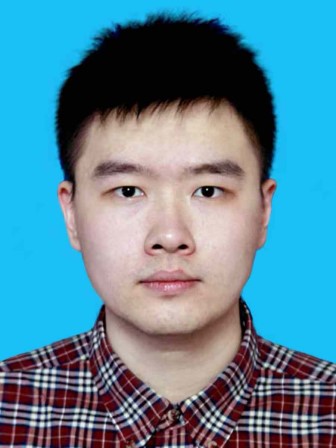
Heshou Wang
The Hong Kong Polytechnic University, China
Heshou Wang received his M.Sc. degree and Ph.D. degree in Electrical Engineering from The Hong Kong Polytechnic University, Hong Kong, in 2018 and 2022, respectively. From 2018 to 2019, he was a research assistant at the Department of Electrical Engineering, The Hong Kong Polytechnic University, where he is currently a postdoctoral fellow. His main research interests include applied electromagnetics, wireless power transfer, and electric vehicles.

Tongfei Shen
Qingdao Huanghai University, China & City University of Hong Kong, China
Tongfei Shen is a Professor in the Department of Artificial Intelligence at Qingdao Huanghai University, a part-time Postdoctoral Fellow at The Hong Kong Polytechnic University, and a Ph.D. in the Department of Computer Science, City University of Hong Kong. At Qingdao Huanghai University, he teaches and conducts research in artificial intelligence. His research centres on artificial intelligence and its scientific applications, spanning computational immunology, AI for science, and deep learning. In computational immunology, he works on T-cell receptor related problems, developing machine learning methods for T-cell receptor repertoire analysis in autoimmune diseases and related prediction tasks. In AI for science, he studies how large language models and deep learning architectures can be engineered for reliable reasoning and prediction in biomedical domains, with emphasis on interpretability, retrieval grounding, and responsible deployment. In deep learning, his interest lies in architectures and training practices that remain dependable when applied to real-world biomedical data. He is the lead author of the review “Pragmatic Engineering of Large Language Model Integration in Biomedical Drug Design”, on which this tutorial is based. A recurring theme across his work is building deep learning systems that remain interpretable, verifiable, and human-supervised when applied to high-stakes biomedical problems.